


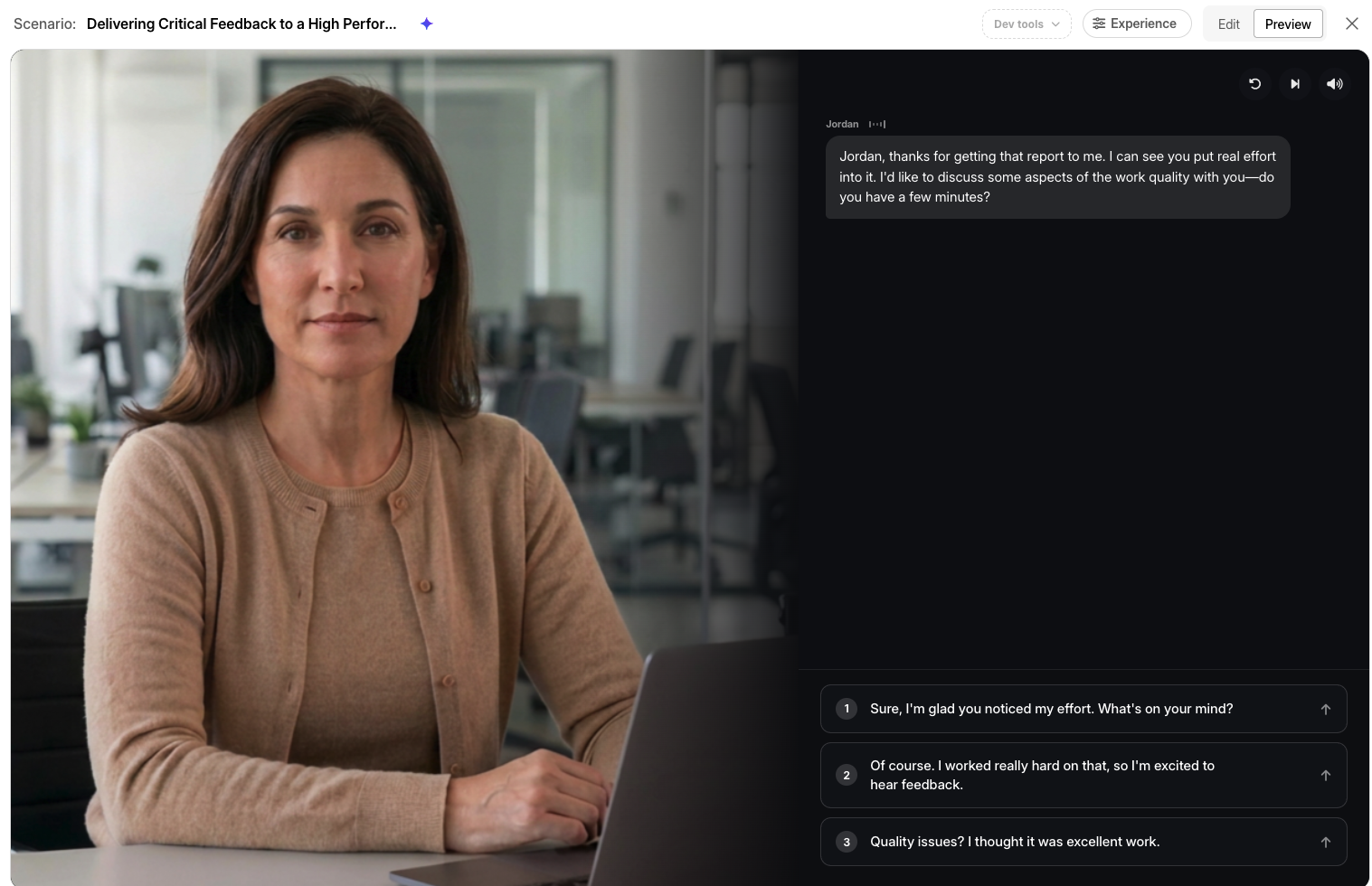
Introducing AI Scenarios
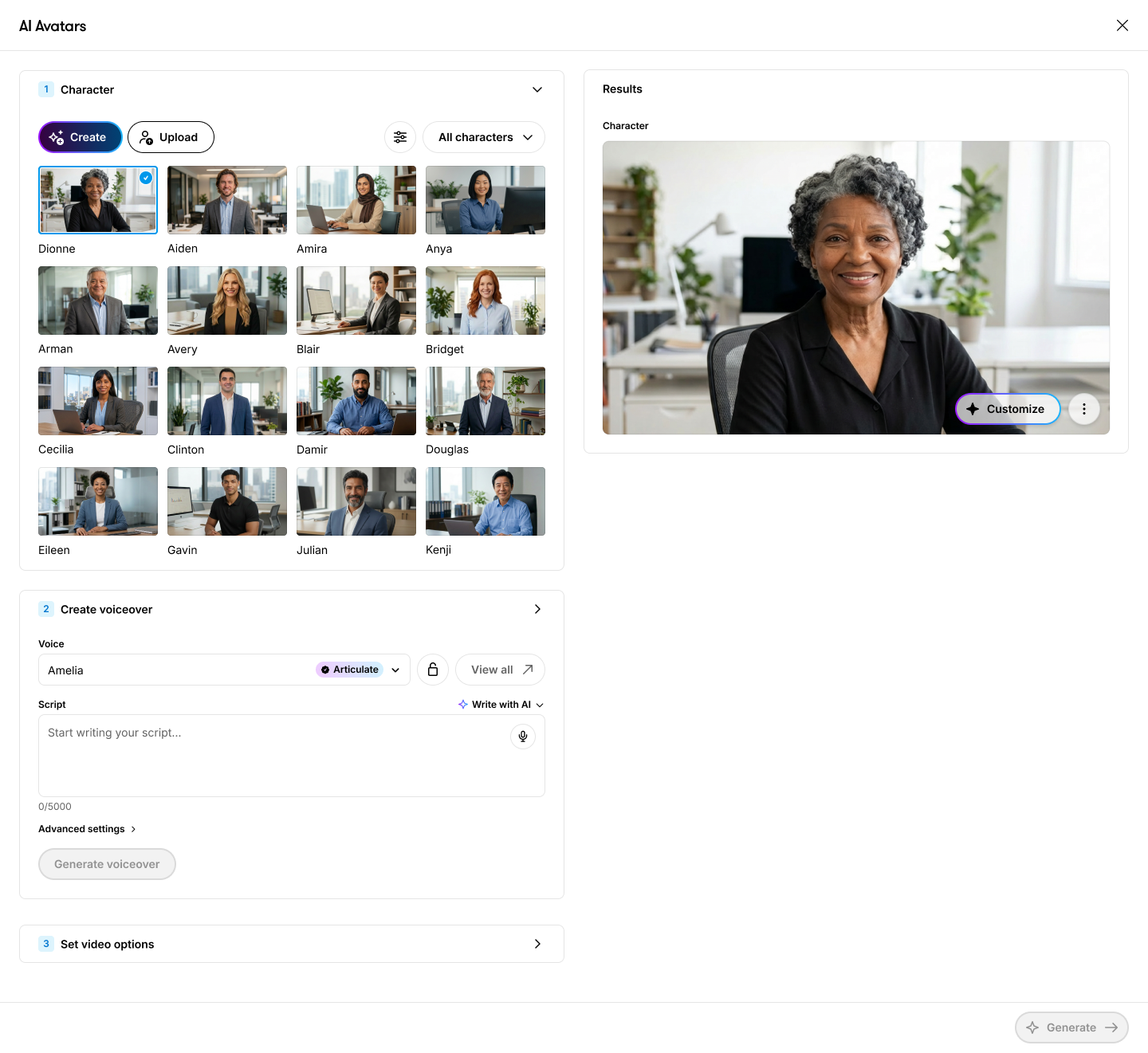
Interconnecting with AI Avatars
The apparent answer
What it was missing
The lesson
Calibration
Choosing where the journey needs attention, and how much fidelity is required to learn what comes next.
WHY IT STAYS STABLE
AI can make an idea look finished before the thinking is ready. You still have to know what evidence will move the work forward.
YOU KNOW THIS SKILL IS WEAKENING WHEN…
You choose the highest fidelity AI can produce for a single moment. People react to the polish before you’ve tested the idea underneath it.
Grounding the artifact in the journey
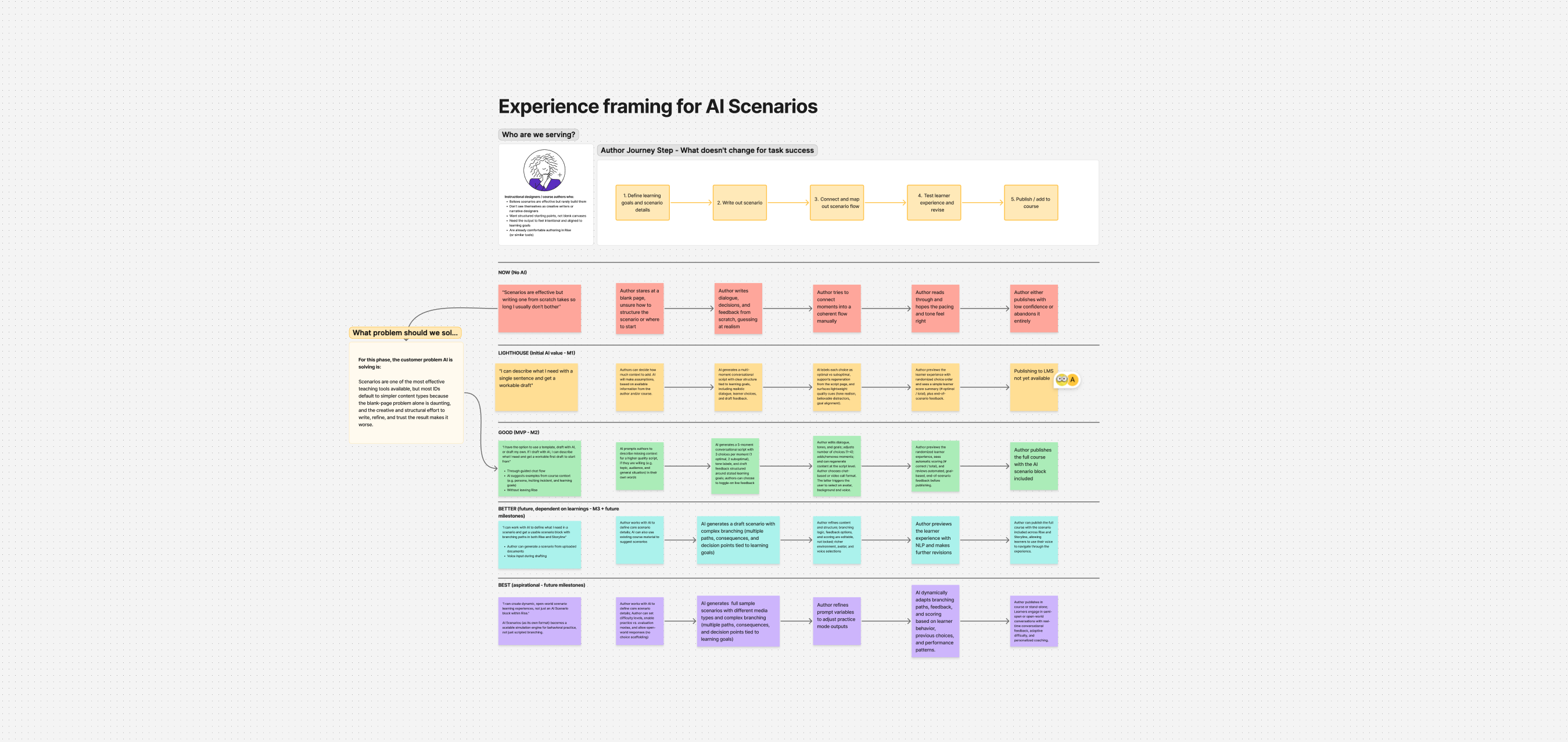
The structure of a completed Experience Frame
Anchor the journey

Evolve the experience
Describe the change
Expose the gaps
Calibrate the artifact
Core Problem: Scenarios work. Creating one from scratch often takes too long to justify.
What decision is this work ready to support?
If you're close to the work
Choose one AI-generated artifact you are about to share.
- Whose journey is this a part of, and what problem are
they trying to solve? - What happens before and after the moment it depicts?
- What could the next release change for that person?
- What larger change are we working toward that this release cannot (or doesn't need to) deliver yet?
If you review or shape the work
Choose one AI-generated artifact someone has brought you.
- What journey problem are we being asked to respond to?
- Does this show enough of the journey to judge the proposed change?
- Is the ambition for this release clear, and does the artifact support it?
- What would we need to learn before committing to the next
level of ambition?
Calibrate an artifact before it leaves your hands
You are helping me calibrate a design artifact before I share it. I’ll describe what I made, who will see it, and what I hope it accomplishes. Ask me one question at a time, and do not move on when my answer is vague. Start by helping me place the artifact inside the wider experience: Who is the person carrying the responsibility, what do they ultimately need to accomplish, and which step of their enduring journey does this artifact address? What becomes possible for them in this version, what must already be true before they reach it, and what must happen afterward for them to complete the journey? Where does the design actively help, and where are they still left to carry the work alone? Then help me clarify the purpose of the artifact: What specific decision should it move, who owns that decision, and what will change after the decision is made? Do not accept “get feedback,” “create alignment,” or “see what people think.” Push me to name the choice, the decision-maker, and the evidence they need. Ask which parts of the artifact are real, which are simulated, which are assumptions, and which remain unresolved or intentionally out of scope. Then judge whether the artifact’s fidelity creates the right level of confidence for that decision. If its polish implies more certainty or journey coverage than we have earned, tell me what to remove, simplify, or label. If it lacks enough substance to support the decision, tell me what must become real, evidenced, or testable. Finish by stating what this artifact demonstrates, what it only suggests, what part of the journey it supports, and what it does not yet prove.
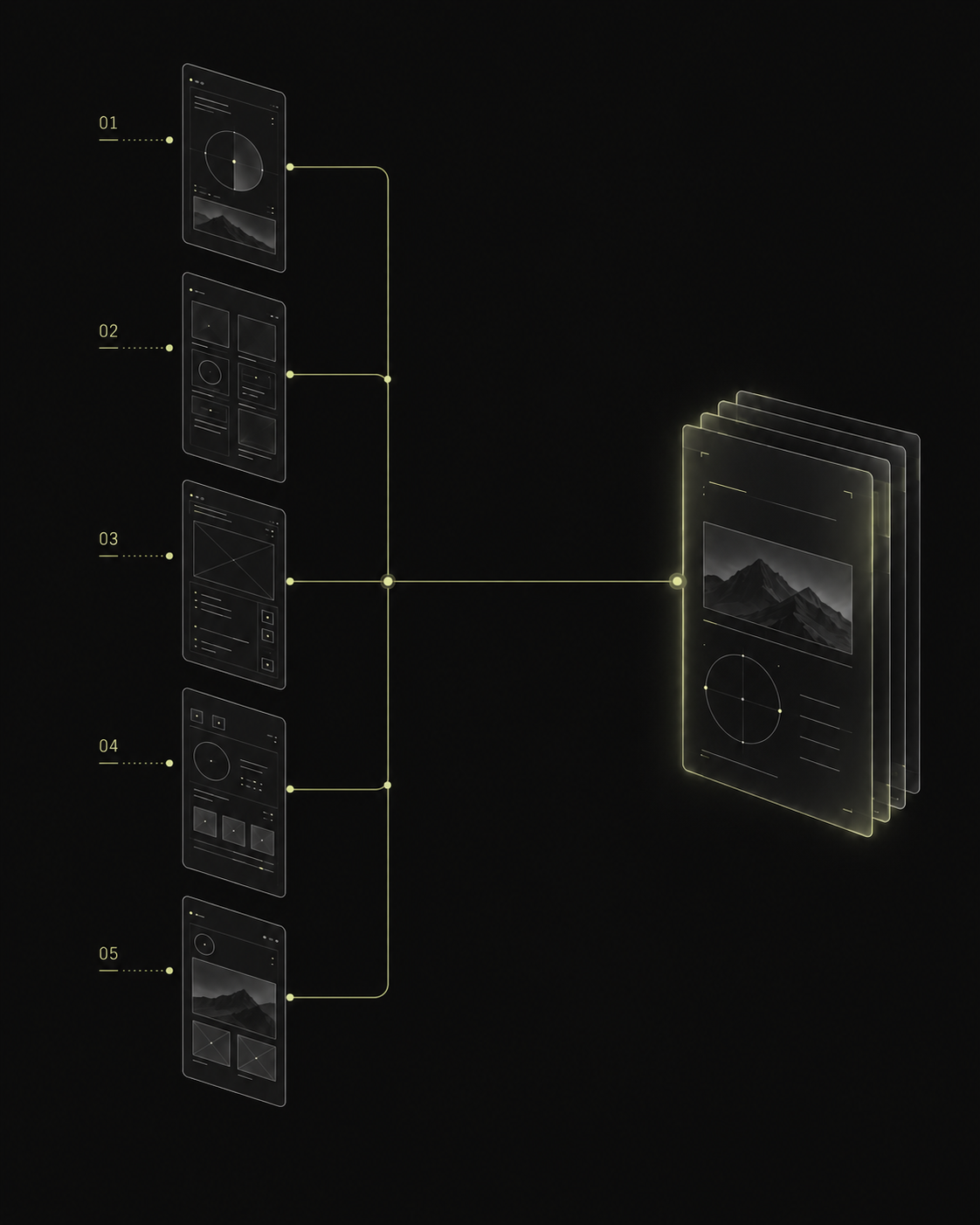
The apparent answer: "We expanded our AI capabilities, so we're now an AI-first company."
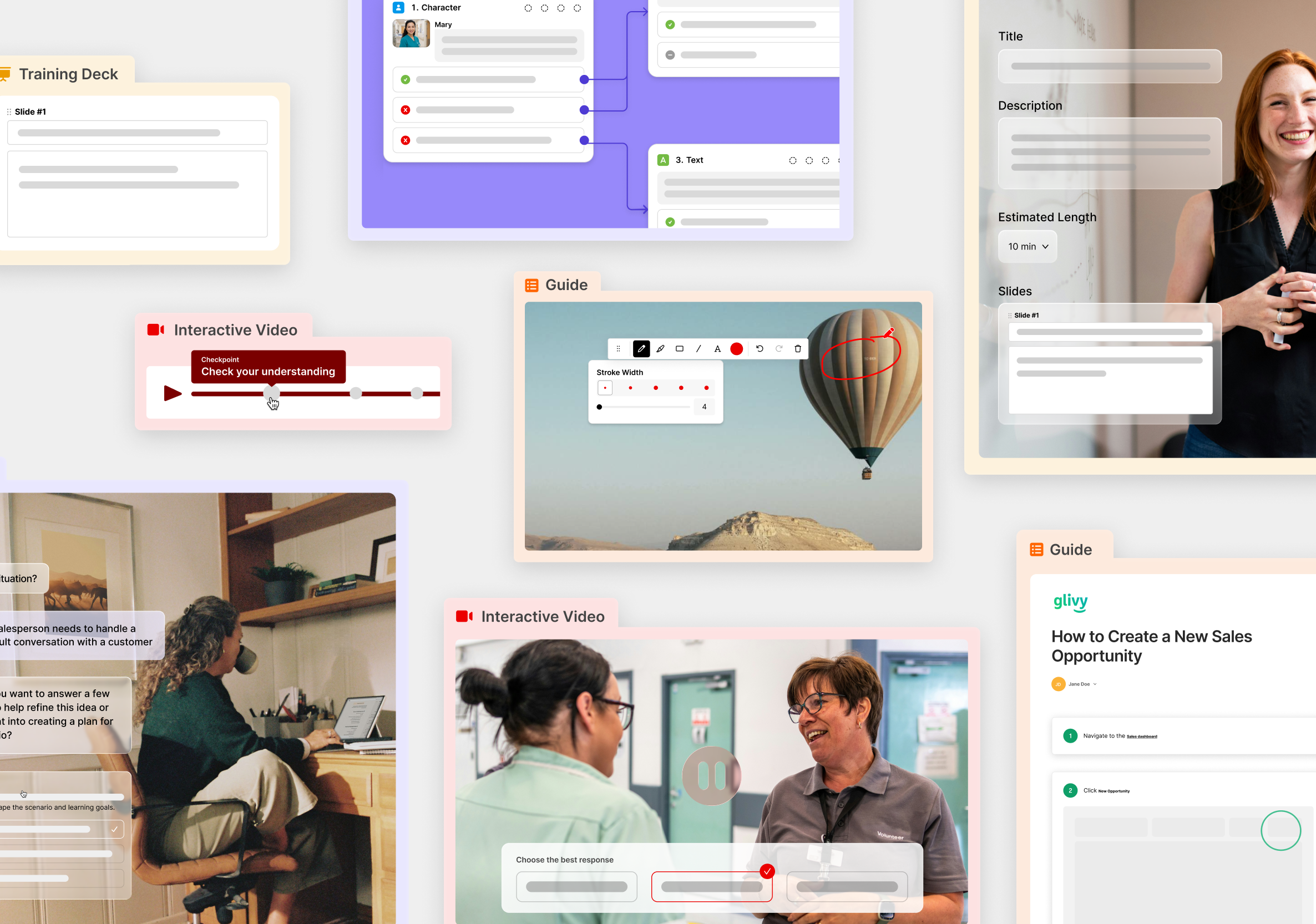
1. Course
2. Scenario
3. Interactive Video
4. Training Deck
5. Guide
01 · Era one
Entrance
Released our first AI Assistant in September 2024.
02 · Era two
Peppering
Expanded AI into more parts of the product to learn what gained traction.
03 · Era three
Converge
Established more consistent design patterns and began cutting what went unused.
My speculation for 2027
The year we earn the right to call ourselves
an AI-first company
I gave myself a goal: make that claim citable by finding the evidence that could prove me right or wrong through a connected Create + Edit with AI experience.
Returning to our roots: "Lifecycle of a Course"
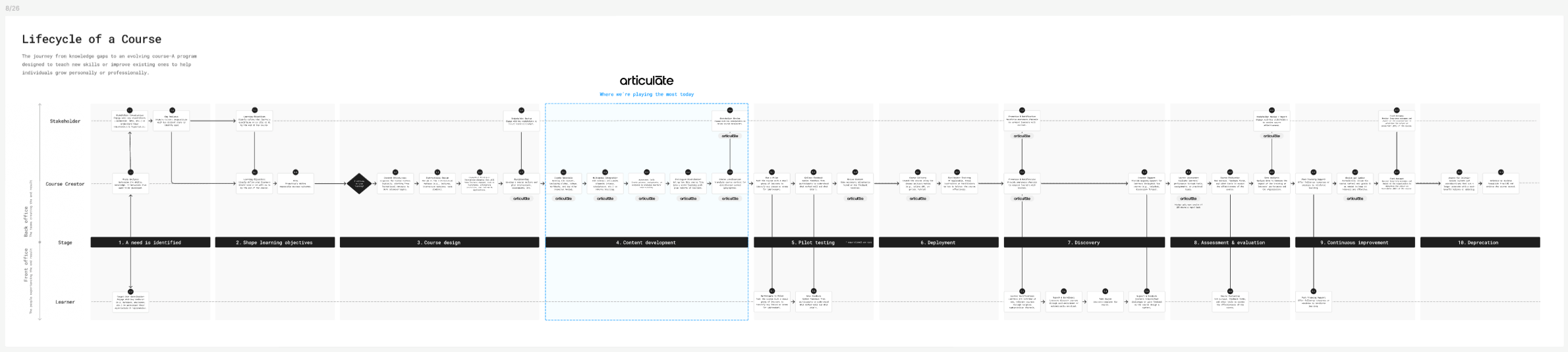
I mapped all 134 AI releases & canceled ideas over the past 3 years against the journey.
What it was missing: An experience frame can tell the story.
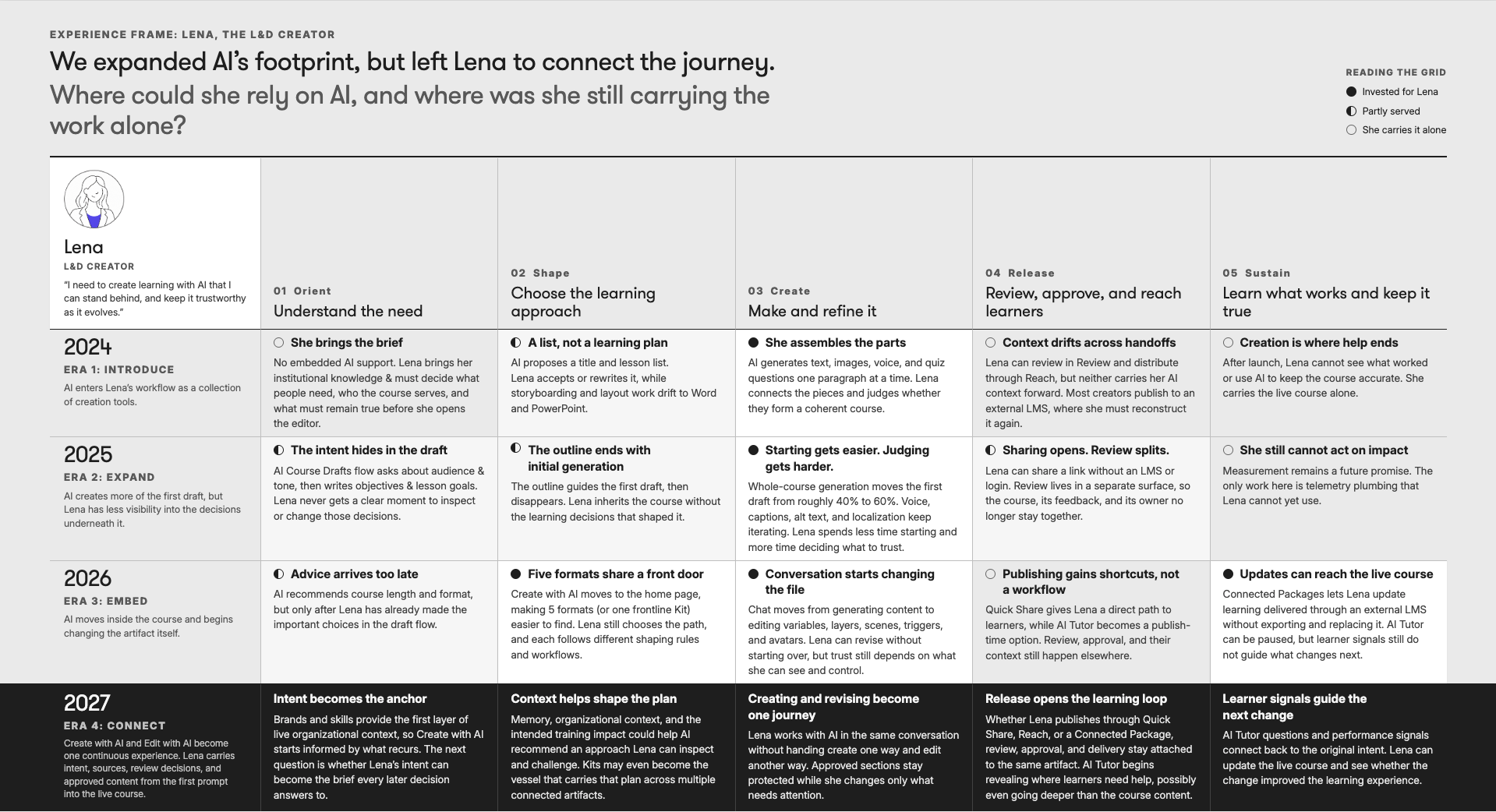
01 · ERA ONE 2024
Entrance
Released our first AI Assistant in September 2024.
02 · ERA TWO 2025
Peppering Expand
Expanded AI into more parts of the product to learn what gained traction.
03 · ERA THREE 2026
Converge Embed
Established more consistent design patterns and began cutting what went unused.
My speculation for 2027
an AI-first company The year AI stops helping with pieces and starts carrying the journey
We earn the right to call ourselves AI-first when Lena’s intent, sources, decisions, and approved work stay connected, from the first prompt through the live course.
Sensemaking
Finding the pattern in scattered evidence and explaining why it matters.
WHY IT STAYS STABLE
AI can organize and summarize evidence. You still have to decide what matters, what’s missing, and what the pattern changes.
YOU KNOW THIS SKILL IS WEAKENING WHEN…
AI generated themes become your findings. You can say what appeared most often, but not why it matters or what to do about it.
studies
made a claim
A summary is not a claim. Fluency is very good at summaries.
Taking a position
Turning evidence into a claim that can guide the work, with a plan to measure it.
WHY IT STAYS STABLE
AI can generate many plausible interpretations. You still have to choose one, accept its tradeoffs, and decide how to test it.
YOU KNOW THIS SKILL IS WEAKENING WHEN…
Your work ends with a summary or a list of options. No claim is made, no tradeoff is named, and nothing can be tested.
Does the work support the story you are telling?
If you're close to the work
Choose one user need, workflow, or idea you touched.
What kept resurfacing?
Where did effort accumulate?
Where was the user still left alone?
What do those choices suggest we optimized for?
If you shape the work
Choose one strategic claim or roadmap theme.
Which investments reinforced the claim?
Which decisions contradicted it?
What repeatedly remained unsupported?
What must change to make the claim true?
Turn an AI summary into graded claims
I am pasting one or more AI-generated research summaries. First, group the material into distinct insight clusters without smoothing over contradictions or gaps. Then interview me one question at a time to uncover what I believe each cluster means, what a reasonable colleague might dispute, and what it could change about my or my team’s next actions. Turn my answers into numbered claims, not a tidier summary. State each claim as one sentence that could be false. Under each claim, sort the supporting material into signal, interpretation, tension, or unknown, and identify the specific evidence you used. Grade both how strongly we should believe the claim (strong, moderate, or thin) and how costly it would be to ignore (high, medium, or low), explaining when those grades differ. Name the role best positioned to own the next action, give the claim a shelf life, and identify the event or new evidence that would expire it. Flag anything presented as a finding that is only an observation nobody has interpreted or committed to. If a reasonable colleague could not disagree with a statement, it is not a claim yet; tell me what we would need to learn, decide, or risk before it becomes one.

The method changed shape so the thinking could survive.
Coordinate investments around the employee journey
Enterprise complexity required shared structure
Experience Backlog Matrix
Hills, User Stories, Agile, Enterprise Design Thinking
The method changed shape so the thinking could survive.
Coordinate investments around the employee journey
Connect product decisions to the member’s whole experience
Enterprise complexity required shared structure
“Agile” language ended the conversation
Experience Backlog Matrix
Hills, User Stories, Agile, Enterprise Design Thinking
Taught UX fundamentals, removed the jargon, added Today
The method changed shape so the thinking could survive.
Coordinate investments around the employee journey
Connect product decisions to the member’s whole experience
Connect fragmented work to the creator’s whole journey
Enterprise complexity required shared structure
“Agile” language ended the conversation
Teams shared problems, but felt workshops took too much time
Experience Backlog Matrix
Hills, User Stories, Agile, Enterprise Design Thinking
Journey Matrix
Taught UX fundamentals, removed the jargon, added Today
Experience Frame
Used familiar framing language to expose progress and gaps
Drop the framework, and you arrive at how we're actually working now.
I learned to protect the reasoning instead of protecting the ritual.
Adapting the work
Changing how you communicate the thinking so each audience can act on it, without losing what matters.
WHY IT STAYS STABLE
Different groups need different language, context, and detail. You decide what to translate and what the work cannot afford to lose.
YOU KNOW THIS SKILL IS WEAKENING WHEN…
You bring the same language and artifact into every room. People understand the presentation but leave unsure what to decide or do.
Adapt the work from where you sit.
If you're close to the work
Choose one handoff you participate in.
What customer outcome must survive?
What decision has already been made?
What context and evidence does the next person need?
What decision comes next?
If you shape the work
Choose one journey that crosses teams.
Who protects the shared outcome?
Where does decision ownership change?
Who owns the next decision?
What would reopen the work?
Hand off the work without losing the reasoning
You are helping me prepare a cross-team handoff without losing the reasoning behind the work. I will describe the journey, decision, or work moving between teams and may paste notes, artifacts, or stakeholder feedback. Interview me one question at a time to identify the shared customer outcome, what has already been decided, who owns that decision, the evidence behind it, and the context the next team needs to act without reconstructing the work. Then clarify what decision comes next, who owns it, and what new evidence or event should reopen what we already decided. Separate decisions from preferences, hypotheses, constraints, and unresolved questions. If feedback is included, route each point to the decision it can actually affect; do not let a preference quietly overturn a decision or treat the loudest person as the owner. Flag missing ownership, contradictions, and context likely to disappear. Preserve meaningful disagreement rather than manufacturing alignment. Finish with a six-line journey record: Customer outcome; Decision and owner; Context to carry; Evidence; Next decision and owner; Reopen when.
The strongest underlying pattern is then:
“You’ve got to start with the customer experience and work backwards to the technology. You can’t start with the technology and try to figure out where you’re gonna try and sell it.”
— Steve Jobs
Our current design tool stack will be out of date by next quarter.
Thinking, writing & running the work
Designing & prototyping
Brand & creative production
Generative & AI media
Research & analytics
In-product language